“Isolation and Characterization of Heterotrophic Bacteria from Blue-Green Algae with Multiple Plant Growth Promoting Traits”
Egyptian Journal of Chemistry
Vol. 66, No. 8 · 209–218 · 2023
View Scientific Publication
EcoCyan Biological Platform
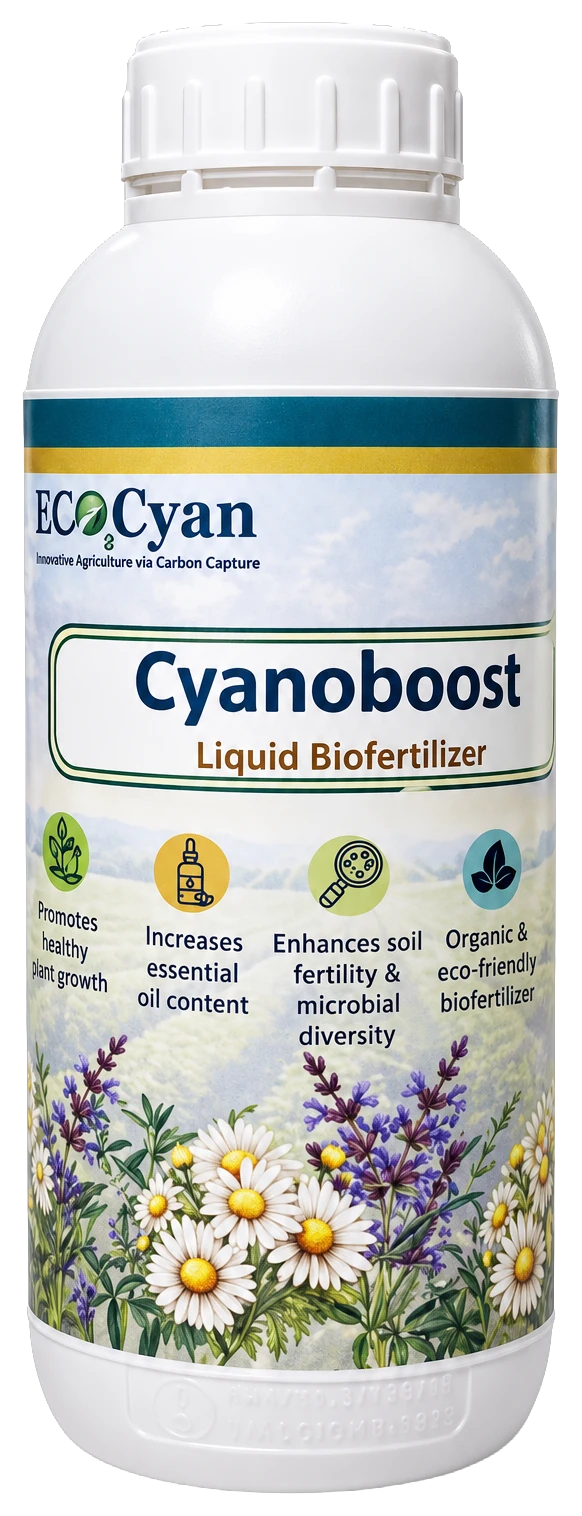
Cyanoboost
Cyanoboost is EcoCyan's flagship cyanobacteria-based biofertilizer platform, developed from agricultural microbiology research.
Its scientific foundation centers on nitrogen-fixing cyanobacteria and the biological interactions between microorganisms, plants and soil.
What is Cyanoboost?
Cyanoboost is a liquid cyanobacteria-based agricultural biological developed around EcoCyan's research platform.
At the center of this platform is Nostoc sp. strain NoHu, a nitrogen-fixing cyanobacterium isolated from arid Egyptian soil and studied together with naturally associated microorganisms.
Rather than approaching crop nutrition as a purely chemical process, Cyanoboost is built around biological interactions between microorganisms, plant roots and the surrounding soil ecosystem.
Conceptual model
A conceptual diagram of the research platform. It does not imply that every researched microorganism is present in the final commercial formulation.

The biological foundation
Nostoc sp. strain NoHu is a nitrogen-fixing cyanobacterium isolated from arid soil at Sekem Farm in Belbis, Egypt.
It became a central organism within EcoCyan's agricultural microbiology research and provides the scientific foundation for the Cyanoboost platform.
Research also investigated the naturally associated heterotrophic bacterial community around NoHu and evaluated multiple plant-growth-promoting activities.
Egyptian Journal of Chemistry Volume 66 · Issue 8 · 2023
Explore the ResearchWhy cyanobacteria?
Cyanobacteria are photosynthetic microorganisms capable of functioning under challenging environmental conditions.
Their biological characteristics make them relevant to research in sustainable agriculture, soil fertility and plant–microbe interactions.
Cyanobacteria use light energy to support their biological growth and metabolism.
Nitrogen-fixing cyanobacteria can biologically interact with nitrogen-limited agricultural environments.
Microorganisms form part of the biological environment surrounding plant roots.
The microorganisms behind EcoCyan's research were studied in relation to arid and challenging agricultural environments.
More than one biological pathway
EcoCyan's underlying research examined cyanobacteria-associated heterotrophic bacteria and screened them for multiple plant-growth-promoting activities.
Activities investigated in the underlying research
These are activities investigated in the underlying research, not guaranteed effects of the final commercial product. Understanding these interactions helps EcoCyan evaluate how microbial communities can contribute to agricultural biological systems.
Around the roots
The rhizosphere is the biologically active zone surrounding plant roots.
It is where plants, soil and microorganisms continuously interact.
Cyanoboost's research direction focuses on this biological environment and on how cyanobacteria and associated microbial systems can support more biologically active agricultural ecosystems.
Why Cyanoboost?
Cyanoboost is designed around biological processes associated with plant development and root-zone interactions.
The platform focuses on the relationship between plants and biologically active microbial communities around the rhizosphere.
Its scientific foundation originates from microorganisms studied in arid and challenging Egyptian environments.
Cyanoboost connects biological crop inputs with EcoCyan's broader vision for regenerative agriculture.
Field evidence
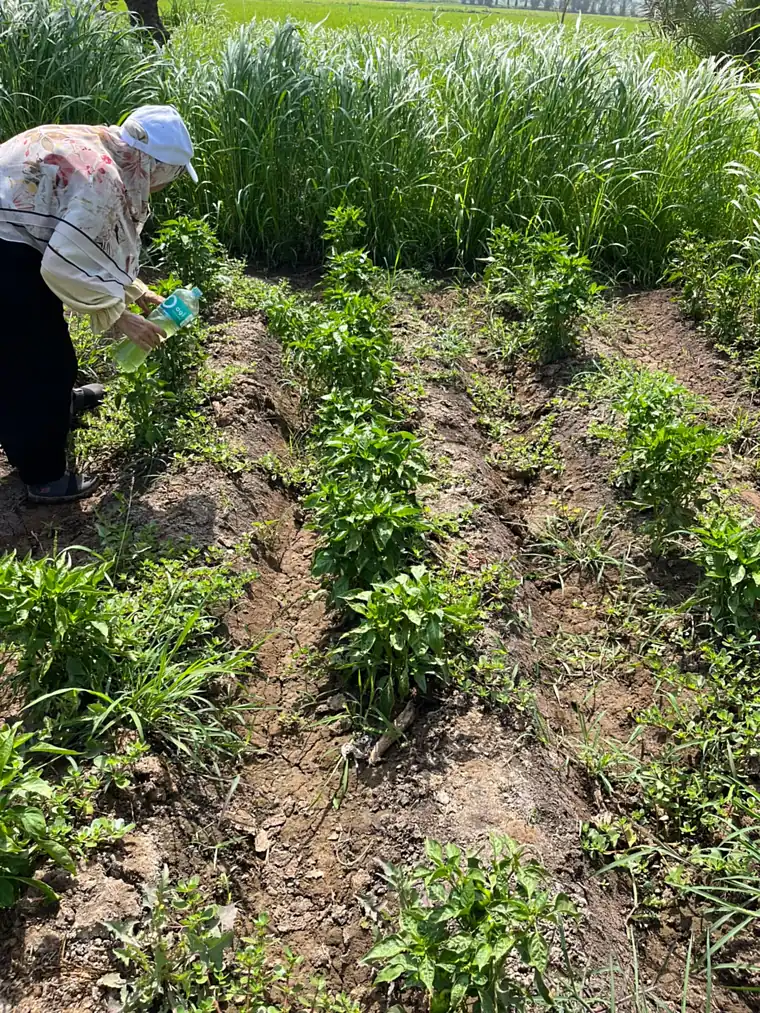
Cyanoboost-related biology has been evaluated under field conditions, including a study involving chamomile.
The presented study reported measurable differences across root development, extracted essential oil and rhizospheric microbial diversity.
Scientific marker
0.45%
Results shown are specific to the referenced study conditions. Agricultural performance may vary according to crop, soil, climate, application method and management practices.
Explore Full Field EvidenceBeyond plant size
EcoCyan's research explores the relationship between biological inputs, root development, plant quality and microbial diversity.
The chamomile study provides an example of this broader approach by evaluating not only plant growth parameters, but also essential oil quality and rhizospheric microbial communities.
A biological agricultural system should be understood as a connected ecosystem, not as a single isolated metric.
Biology with context
The biological foundation behind Cyanoboost originates from microorganisms isolated and investigated in Egyptian arid-soil environments.
This research context is especially relevant to EcoCyan's focus on agricultural systems facing environmental stress and challenging growing conditions.
Research traceability
EcoCyan's platform is built around scientifically identified microorganisms rather than an anonymous biological blend.
The underlying research used molecular identification techniques, including 16S rRNA sequencing, to characterize selected microorganisms associated with the research platform.
“Isolation and Characterization of Heterotrophic Bacteria from Blue-Green Algae with Multiple Plant Growth Promoting Traits”
Egyptian Journal of Chemistry
Vol. 66, No. 8 · 209–218 · 2023
View Scientific PublicationBeyond the product
Cyanoboost is one part of EcoCyan's broader approach to regenerative agriculture.
By exploring photosynthetic microorganisms, living soil and plant–microbe interactions, EcoCyan aims to develop biological technologies that can complement the transition toward healthier and more resilient agricultural ecosystems.
Who is it for?
EcoCyan's target market includes farmers and agricultural partners interested in biological and regenerative production systems.
For growers already working with biologically oriented agricultural practices.
For growers exploring the gradual integration of biological agricultural inputs.
For farms, agribusinesses, researchers and distributors interested in field validation, biological products and regenerative agriculture.
Biological agricultural products interact with complex living environments.
Performance can vary depending on crop, soil characteristics, climate, irrigation, farm management and application practices.
EcoCyan therefore approaches Cyanoboost through continued research, field evaluation and responsible agricultural deployment.

Interested in Cyanoboost, field evaluation, distribution or research collaboration? Connect with EcoCyan to explore how our biological platform can fit into your agricultural context.